
Key Takeaways
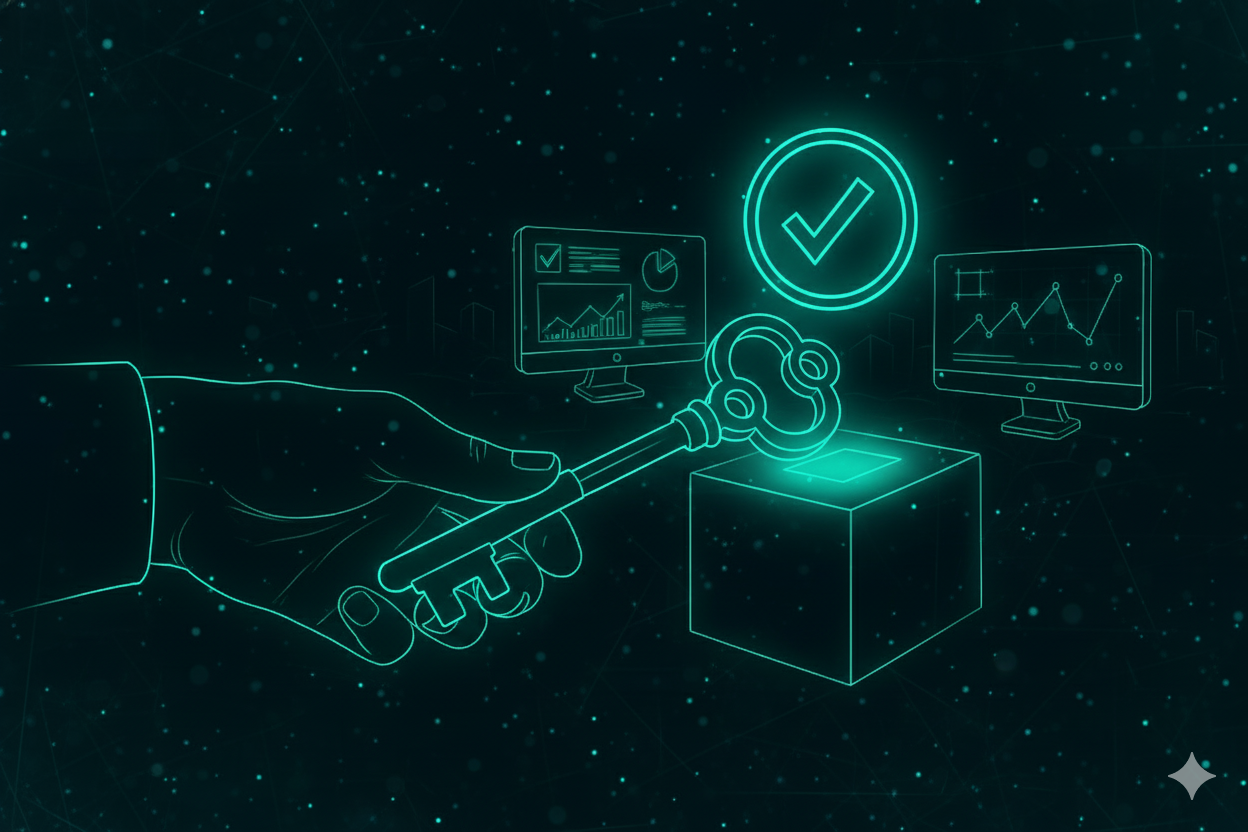
The holy grail of automated trading has always been combining the power of AI with the security of self-custody. ERC-4337 account abstraction makes this possible by enabling smart contracts to act as programmable wallets, allowing AI agents to execute trades on your behalf while you maintain complete control over your funds.
You Keep the Keys: ERC-4337 Self-Custodied Trading
How Account Abstraction Enables Autonomous Trading Without Custody Risk
Key Takeaways The holy grail of automated trading has always been combining the power of AI with the security of self-custody. ERC-4337 account abstraction makes this possible by enabling smart contracts to act as programmable wallets, allowing AI agents to execute trades on your behalf while you maintain complete control over your funds.
The fundamental tension in automated trading has always been between convenience and control. To use an AI trading bot, you traditionally had to choose: either deposit your funds with a third-party service (giving up custody) or provide API keys with withdrawal permissions (giving up security). Both options require an uncomfortable level of trust. ERC-4337 account abstraction eliminates this false choice by creating a new category of wallet that can be programmed to follow specific rules while maintaining user sovereignty.
Think of ERC-4337 as creating a "smart wallet" that can execute complex logic while preserving the security guarantees of self-custody. Unlike traditional externally owned accounts (EOAs) that require a private key signature for every transaction, account abstraction allows smart contracts to validate transactions using custom logic. This means you can create a wallet that follows predetermined rules—like "only execute trades that pass risk checks" or "never withdraw more than X% of the portfolio"—without requiring your direct approval for each action.
The Architecture of Trust
Traditional automated trading requires you to trust a centralized service with either your funds or your API keys. This creates a single point of failure and a honeypot for attackers. ERC-4337 flips this model by embedding the rules directly into the blockchain itself.
**Smart Account Creation**: Your trading account is a smart contract deployed on Ethereum (or compatible chains). This contract defines the rules under which trades can be executed. Unlike a traditional wallet where possession of the private key grants unlimited access, the smart account can only perform actions that comply with its programmed logic.
**Bundler Network**: Instead of submitting transactions directly to the blockchain, your AI agent creates "UserOperations" that describe the intended trades. These are submitted to a decentralized network of bundlers who validate the operations against your account's rules before including them in a block.
**Paymaster Integration**: One of the most elegant features of ERC-4337 is the ability to pay transaction fees in tokens other than ETH. This means your trading account can pay gas fees using USDC from your portfolio, eliminating the need to maintain a separate ETH balance for operations.
Programmable Permissions
The real power of ERC-4337 lies in its programmability. Your smart account can implement sophisticated permission systems that would be impossible with traditional wallets:
**Time-Based Restrictions**: Trades can only be executed during market hours or specific time windows. This prevents your AI from making decisions during low-liquidity periods or when you're unable to monitor its activity.
**Risk-Based Limits**: Every trade must pass on-chain risk checks before execution. This could include position size limits, portfolio concentration caps, or Value-at-Risk thresholds. The beauty is that these checks are enforced by the blockchain itself, not by a potentially fallible external system.
**Multi-Signature Requirements**: For large trades or significant portfolio changes, the smart account can require additional signatures from designated parties. This creates a natural circuit breaker for high-impact decisions.
**Emergency Controls**: You can always override or pause the AI's trading permissions through emergency functions that only you control. This provides a kill switch that works even if the AI system itself becomes compromised.
Integration with Traditional Brokers
While ERC-4337 provides the custody and permission framework, most trading still happens on traditional exchanges through established brokers. The integration works through a hybrid architecture:
**Intent-Based Orders**: Your AI agent generates trading intents (buy X shares of Y stock) that are validated by your smart account. Once validated, these intents are forwarded to your traditional broker through secure API connections.
**Proof of Authorization**: Each order includes a cryptographic proof that it was authorized by your smart account and complies with all programmed restrictions. This proof can be verified by the broker, providing an additional layer of compliance assurance.
**Settlement Reconciliation**: After trades execute at your broker, the results are reported back to your smart account, which updates its internal state to reflect the new portfolio composition. This ensures that future risk calculations are based on accurate, up-to-date position data.
Real-World Implementation
Implementing ERC-4337 for trading requires careful consideration of both technical and regulatory requirements:
**Gas Optimization**: Trading operations must be gas-efficient to remain economically viable. This requires optimized smart contract code and strategic use of batch operations to minimize transaction costs.
**Regulatory Compliance**: The smart account must implement all necessary compliance checks, including KYC verification, sanctions screening, and regulatory reporting requirements. These checks must be performed on-chain to maintain the trustless nature of the system.
**Cross-Chain Compatibility**: Modern portfolios often span multiple blockchains and traditional assets. The account abstraction system must be able to coordinate actions across different networks while maintaining consistent risk management.
**Recovery Mechanisms**: Unlike traditional wallets where losing your private key means losing your funds, smart accounts can implement sophisticated recovery mechanisms. This might include social recovery (trusted contacts can help restore access) or time-locked recovery procedures.
The Security Advantage
ERC-4337 provides several security advantages over traditional automated trading approaches:
**Immutable Rules**: Once deployed, your smart account's core logic cannot be changed without your explicit approval. This prevents unauthorized modifications to your trading rules, even by the AI service provider.
**Transparent Operations**: All trading decisions and their justifications are recorded on-chain, creating an immutable audit trail. This transparency makes it easy to verify that your AI is operating as intended.
**Decentralized Validation**: The bundler network provides decentralized validation of trading operations, eliminating single points of failure and reducing the risk of coordinated attacks.
**Composable Security**: You can combine multiple security modules (multi-sig, time locks, spending limits) to create a custom security profile that matches your risk tolerance and operational requirements.
Looking Forward
ERC-4337 represents a fundamental shift in how we think about automated trading. By separating the logic of trading decisions from the custody of assets, it enables a new class of financial applications that are both powerful and secure.
The implications extend beyond individual trading. Institutional investors can use account abstraction to create sophisticated, rule-based investment vehicles that operate autonomously while maintaining regulatory compliance. DAOs can implement treasury management strategies that execute automatically based on predefined criteria. Family offices can create multi-generational investment structures with built-in governance and succession planning.
Most importantly, ERC-4337 democratizes access to sophisticated trading infrastructure. The same account abstraction technology that enables a hedge fund to implement complex risk management can be used by an individual investor to automate their retirement savings or rebalance their portfolio. The tools of Wall Street are becoming available to everyone, without the traditional trade-offs between sophistication and security.
The future of trading is not just smarter—it's safer, more transparent, and more accessible than ever before. And you get to keep the keys.